
What Makes the Top Product Design Companies In India Stand Out?

Taking a raw concept from a simple sketch to a physical item demands way more than a brilliant spark of imagination. A winning product has to genuinely solve a real pain point, perform flawlessly, feel entirely natural in the user's hands, and boast a streamlined roadmap to mass production. Partnering with the right product development squad turns that rocky journey into a smooth ride.
The top product design companies in India bring together industrial design, engineering, research, prototyping, and manufacturing knowledge to develop products from the early concept stage. Instead of treating design as an isolated visual exercise, they consider how every decision affects usability, functionality, materials, production, and the final user experience.
How Does Product Research Shape Better Concepts?
Building a killer product starts with obsessing over the core problem it is meant to solve. Before sketching CAD drawings, you need to deeply understand your target users, their exact expectations, and where current market alternatives completely drop the ball. Digging into user behavior, competitor flaws, market shifts, operating environments, and engineering constraints lays down an unbreakable foundation for brainstorming killer directions.
Running a rigorous research phase stops design squads from falling head over heels for their very first brainstorm. Pitting multiple concepts against actual user needs, engineering limits, and production realities before locking in final CAD files keeps wild creativity tightly tethered to hard, functional purpose.
Why Is Industrial Design More Than Product Appearance?
Industrial design shapes a product's physical shell and everyday user experience, stretching far past superficial aesthetics. Good design deeply considers tactile ergonomics, natural grip comfort, smart material and finish selection, and how every mechanical piece locks together harmoniously. The top product design companies in India understand that form and function need to support each other. The shape of a product can affect its ergonomics, assembly, material requirements, and manufacturing method.
During the ideation phase, designers sketch wild concepts, experiment with alternate geometries, tweak proportions, and sharpen the most promising paths. Spotting major engineering roadblocks or manufacturing hiccups right here stops massive waste long before heavy tooling kicks off.
How Does Engineering Support Product Development?
A slick sketch means nothing if it falls apart in the real world. Solid engineering steps in to turn design concepts into working gears, structural assemblies, and bulletproof mechanical solutions. Sorting out material grades, strict tolerances, assembly clearances, and production specs right here ensures the final item holds up reliably under harsh, everyday stress.
Bridging industrial design with hardcore engineering keeps user experience front and center while technical decisions fly. Stylists can polish exterior lines and ergonomics while mechanical teams map out internal ribs, gears, and structural support. Fusing these disciplines together delivers products where sleek looks, intuitive handling, and rock-solid performance work as one cohesive unit.
How Does Prototyping Improve Product Development?
Digital 3D CAD models reveal plenty about a product's geometry, but physical prototypes tell the real story. Getting a tangible sample into human hands lets development squads test ergonomics, evaluate mechanical operation, catch design flaws, and inspect finishes long before committing to expensive production tooling. Depending on the product and development stage, prototypes can help assess:
Overall dimensions and proportions
Ergonomics and handling
Component fit and assembly
Product functionality
Mechanisms and movement
Materials and finishes
User interaction
Putting a physical sample through its paces exposes hidden flaws that sleek CAD files completely hide. A handle might demand a softer ergonomic curve, a tight internal part needs a tolerance tweak, or a complex assembly begs for simple cost-saving optimization. Feeding these hard lessons back into the next design sprint polishes the product to absolute perfection before mass manufacturing kicks off.
How Can Specialized Product Services Support Different Industries?
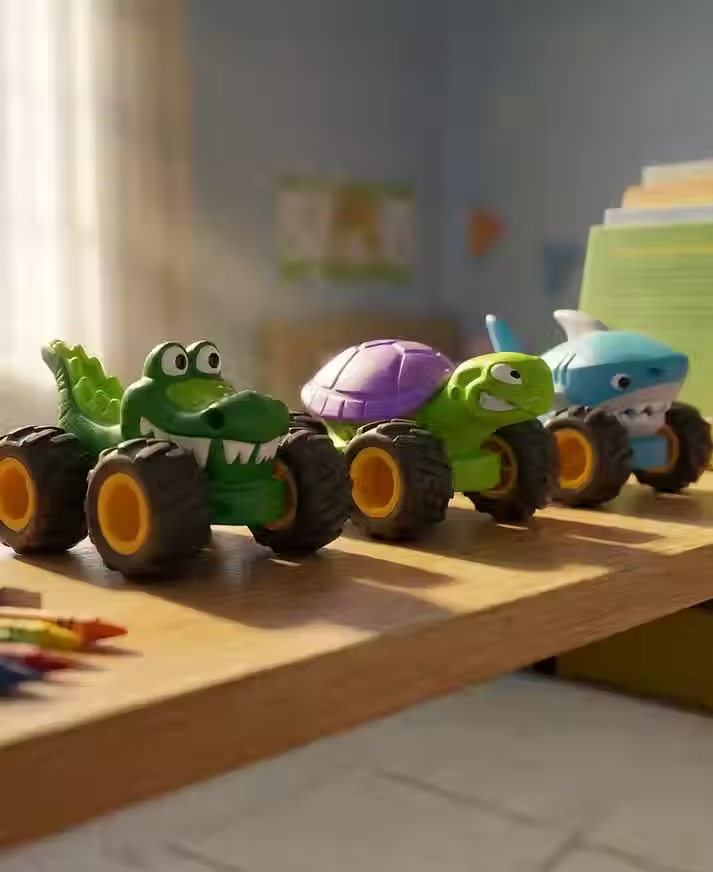
Distinct product types demand completely unique approaches. Consumer gadgets require microscopic attention to tight internal packaging and seamless digital interaction, while furniture relies heavily on robust ergonomics, structural resilience, and material choice. Entering the toy sector mixes unbridled creative flair with rigorous safety engineering. Specialized toy design workflows handle everything from initial playful concept sketches and ergonomic scale studies to rapid prototyping and production feasibility checks.
A structured toy design service can also help transform an early idea into a physical product by connecting creative development with practical production requirements. This is particularly relevant when the product needs to balance play value, usability, physical interaction, and manufacturability. Understanding the specific requirements of each product category allows the development process to remain focused rather than relying on a one-size-fits-all approach.
From Concept To Production-Ready Product
Building physical goods takes a tight chain of interlocking choices. Initial research sets the ground rules, conceptual ideation maps out creative avenues, industrial design crafts the user experience, engineering tackles the nuts-and-bolts mechanics, and precise CAD modeling injects micro-level detail. Physical prototyping follows up by putting a real sample to the test, while DFM practices prep the blueprints for factory floors. Every single phase feeds the next, forging a bulletproof pipeline from raw imagination straight to mass production.
At Studio701, these capabilities come together across industrial design, engineering, prototyping, DFM, CMF, 3D CAD modeling, ergonomics, and production support. This integrated approach supports founders, inventors, manufacturers, and emerging brands looking for the capabilities associated with the top product design companies in India. The same structured process can also support specialized requirements, including a toy design service, while keeping user needs, functionality, design, and manufacturing feasibility connected throughout development.
FAQs
1. What makes the top product design companies in India stand out?
Ans: The top product design companies in India typically combine research, industrial design, engineering, CAD modeling, prototyping, ergonomics, DFM, and production support. This allows different product development requirements to be considered together.
2. What is included in a Toy Design Service?
Ans: A toy design service can include toy concept development, sketching, form exploration, ergonomics, CAD modeling, prototyping, material considerations, and manufacturing-related development based on the project's requirements.
3. Why is prototyping important for product development?
Ans: Prototyping allows teams to physically evaluate a product's dimensions, usability, ergonomics, functionality, component fit, and user interaction. Feedback from prototypes can then guide further design and engineering refinements.
4. How can the top product design companies in India help with manufacturing?
Ans: The top product design companies in India can incorporate Design for Manufacturing (DFM) into development by considering materials, production methods, tolerances, component complexity, and assembly requirements before the design moves toward production.
5. Can Studio701 support different types of product development projects?
Ans: Yes. Studio701 supports product development through capabilities such as industrial design, engineering, prototyping, DFM, 3D CAD modeling, ergonomics, and production support. These capabilities can be adapted to different product categories and development requirements.



Comments